Entnetzt - INTERFACE EG / Transformationsstrategien für eine Kieler Straße
Emma Bredemeier
Semesterprojekt im Bachelor
/
Wintersemester 2024/2025
Projektbetreuung:
Prof. Christian Teckert
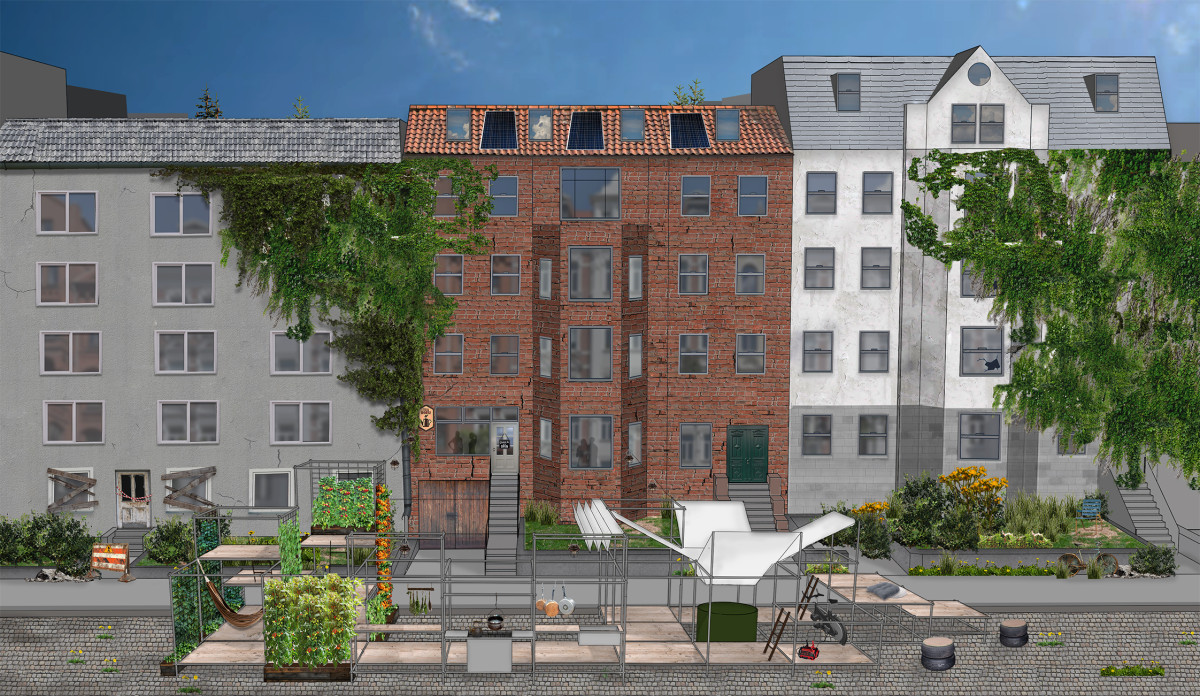
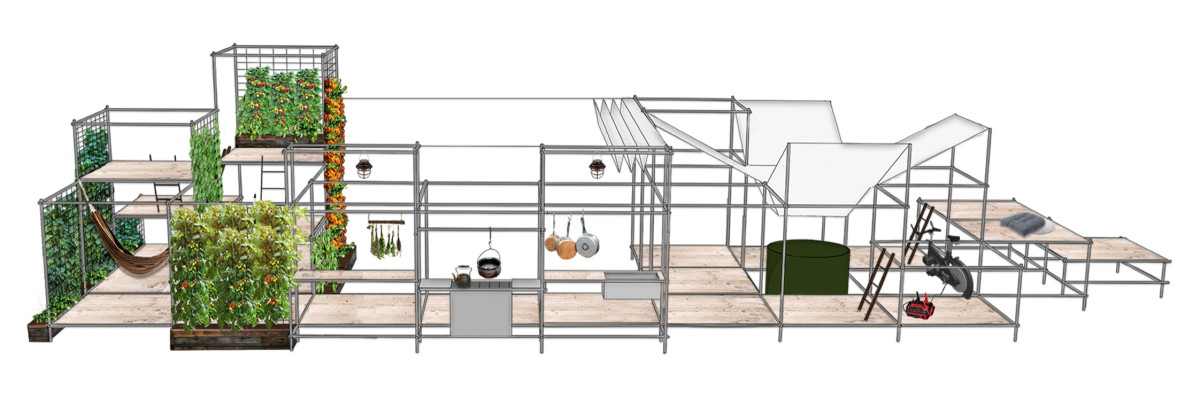
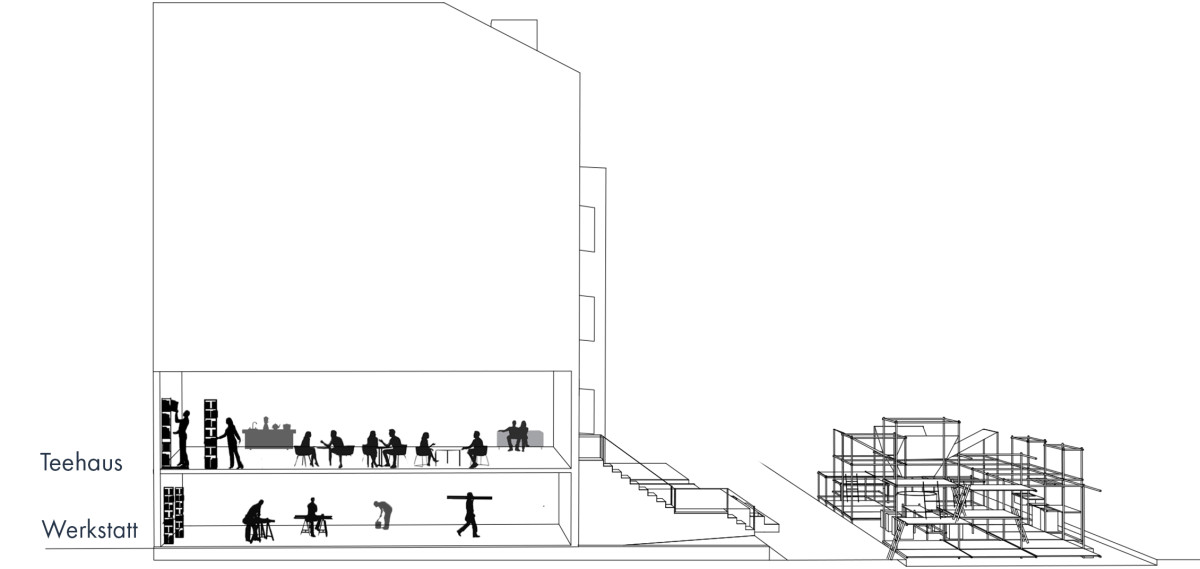
Das Projekt ist eine Interpretation des „Netzland Szenario“. Jenes beschreibt Deutschland 2050, dessen Einwohner sich hauptsächlich in Superstruktur- Städten bündeln. Diese sind durch eine Infrastruktur vernetzt, welche unter der Kontrolle von Unternehmen stehen. Aufgrund einer korrupten Struktur, aufgebaut auf unternehmerisch, wirtschaftlichen Interessen, fliehen überwiegend junge Menschen in „entnetzte“ Städte und erproben Austiegsmodelle. Sie ziehen in das zurückgelassene Kiel, dass seinen Anschluss an das Netz verpasst hat. Hier versuchen sie ihren eigenen experimentellen Kreislauf aufzubauen und sich aus jeglichem Einfluss des Netztes zu entziehen. Die „Entnetzten“ recyceln gefundene Materialen zu ihrem Zweck, nutzten Technik nur um ihren Kreislauf zu unterstützen und bauen eine Community auf, welche auf die Mitarbeit Aller zählt und Tausch als präferierte Währung sieht. Sie nutzten den Erdgeschoss- und Straßenraum, um ihren Ausstieg zu unterstützen.
The project is an interpretation of the "Netzland Scenario". It describes Germany in the year 2050, whose inhabitants are mainly concentrated in superstructure cities. These are interconnected through an infrastructure that is controlled by large companies. Due to a corrupt structure built on the economic interests of these large corporations, young people flee to "de-networked" cities and experiment with alternative living models. They flee to the left-behind Kiel, which is not connected to the network and whose real estate prices are therefore at rock bottom. Here they attempt to build their own experimental living circuit and try to rely as little as possible on the net cities. The "unconnected" recycle found materials to meet their needs, use technology only to support their cycle, and build a community based on mutual work and exchange as a preferred new currency. They use the ground floor and street area in a way that contributes to their cause.