Spaces for Mobility - Der Kieler Hauptbahnhof als Symbol einer neuen Mobilität
Tobias Pöpping
Masterthesis
/
Sommersemester 2024
Projektbetreuung:
Prof. Manfred Schulz, Prof. Norbert Schmitz
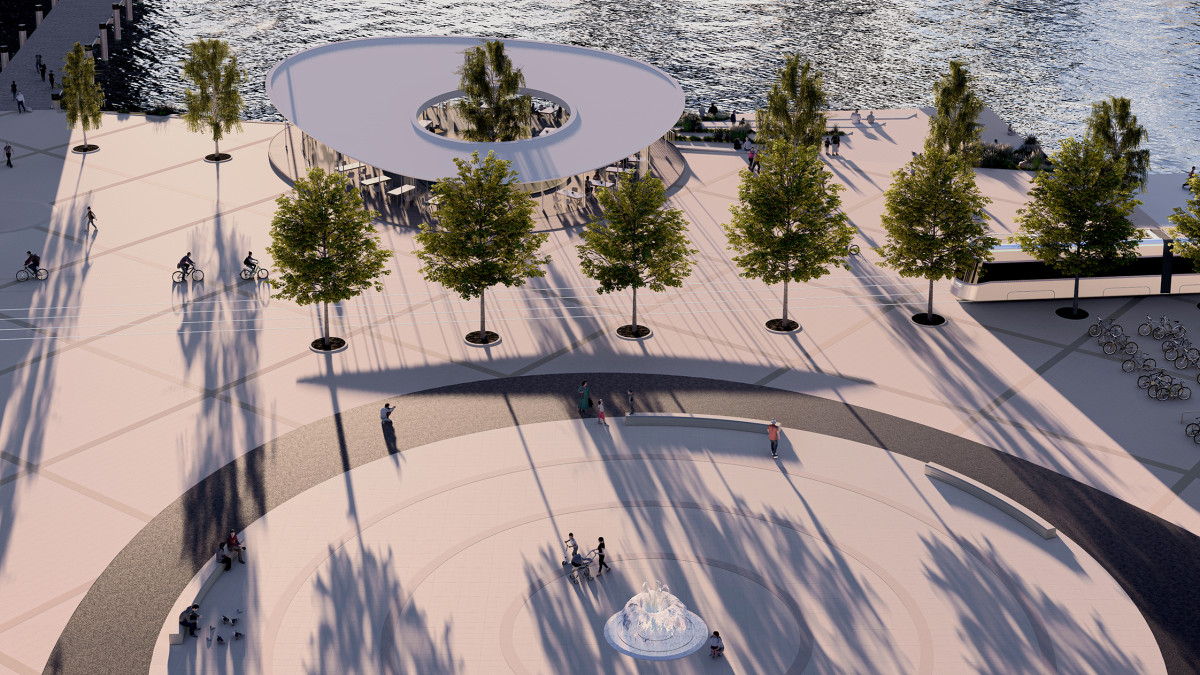
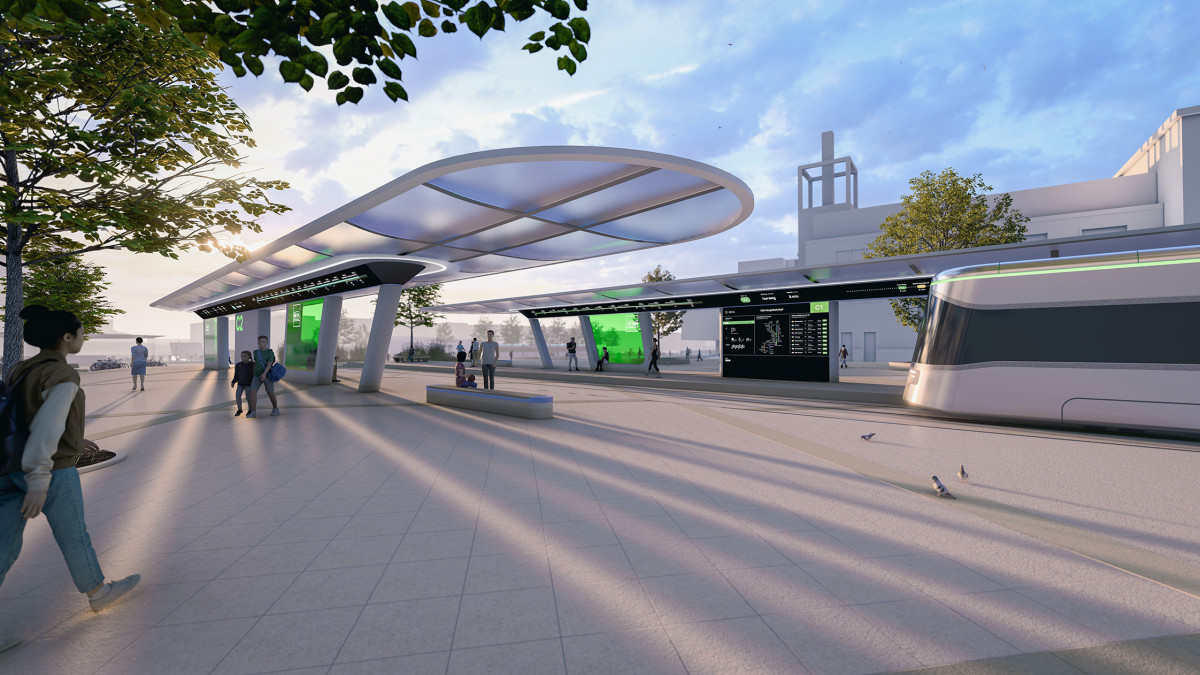
grundlegend zu überdenken. Der Hauptbahnhof ist dabei nicht nur der größte Verkehrsknotenpunkt
der Stadt, sondern auch der zentrale Eintrittsort in das Kieler Verkehrssystem. Seine Gestaltung
symbolisiert das Verkehrsverständnis der Stadt und könnte ein Statement für eine neu gedachte
Mobilität formulieren.
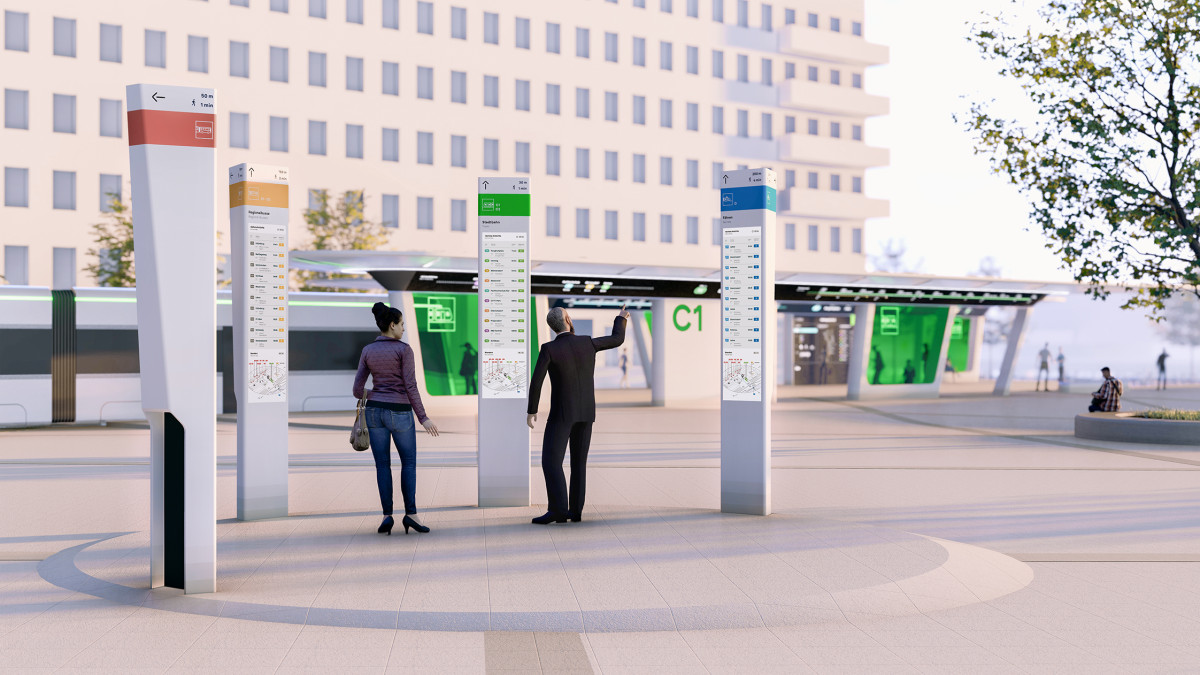
Neben einer klaren, intuitiven Verkehrsführung, die alle Verkehrsträger harmonisch verbindet,
eröffnet sich die Möglichkeit, den bisher autodominierten Hauptbahnhof in einen lebendigen Ort mit
direktem Zugang zum Meer zu verwandeln – ein Alleinstellungsmerkmal, das Kiels maritime Identität
betont.
Das Projekt zeigt, wie Mobilität aussehen kann, wenn Menschen im Mittelpunkt stehen: von
barrierefreien Übergängen und klarer Orientierung bis hin zu Aufenthaltsräumen, die zum Verweilen
einladen. Der Hauptbahnhof wird so zum Symbol nachhaltiger, menschenzentrierter Mobilität.
The planning of a light rail system for the city of Kiel is an opportunity for a fundamental debate on
the design of transport spaces. The main train station is not only the largest transportation hub in the
city, but it is also the central point of entry into Kiel's transportation system. Its design is a symbol of
the city's understanding of transportation and could be a statement for a new vision of mobility.
In addition to clear, intuitive traffic routing that harmoniously connects all modes of transportation, it
opens up the possibility of transforming the previously car-dominated central station into a vibrant
place with direct access to the sea - a unique feature that underlines Kiel's maritime identity.
The project demonstrates how mobility can appear when the focus is on people: from barrier-free
transitions and clear orientation to recreational spaces that invite people to linger. The central station
will therefore become a symbol of sustainable, people-centered mobility.